“When I arrived there, my emotions were very mixed. But I trusted God, and I trusted the work that the UFW Foundation were doing”
Milton, Bakersfield, CA
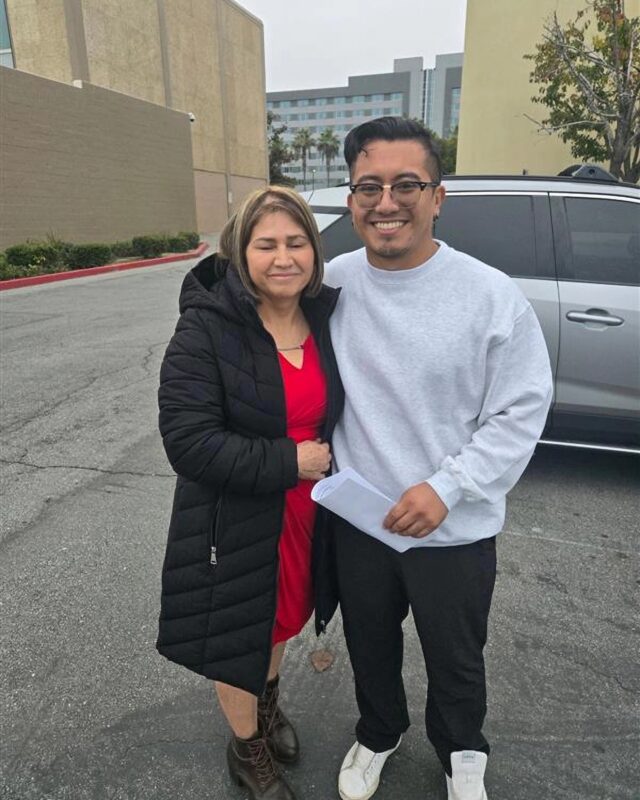
Milton is not a stranger to the United States, but his journey here brought him to experience not only the worst in humanity, but also the best in humanity.
Milton was born in Managua, Nicaragua and was initially in the United States as a kid, but due to situations in his life, his family ended up going back to Nicaragua when he was 16. Finishing school, Milton became an operations manager in the call center industry.
It wasn’t until 2018 that Milton’s circumstances changed. During that time, the Nicaraguan officials misused its social security funds as a slush fund, shining a light on government corruption. Milton became involved in protests and demonstrations calling for reforms and an end to these corrupt practices. He soon became a government target, with his family being harassed, threatened, and targeted to get to him. This eventually led Milton into hiding and leaving Nicaragua due to fear of violent retribution.
This led to him traveling through thick jungles, intense weather conditions, and arrived in the United States after experiencing months of hardships and danger.
After crossing the border into the US, Milton surrendered himself to border patrol, was processed and released to his mom’s house in California.
“Since then, I have followed the process,” Milton said. “I have never missed a visit. I have never missed any type of supervision or court date. After almost a year of being here, I found out about the legal services offered by the UFW Foundation. They accepted my case and represented me in all my legal matters.”
Since then, Milton has worked for different companies and organizations, including in the fields of agriculture, healthcare, and in music education, all while being monitored and reporting for his regular check ins. During one of his check ins, Milton was brought in, ambushed, arrested and detained by ICE at a facility in Bakersfield.
His phone was taken away and when asked to use a phone, was given only one phone call. He ended up calling Ambar Tovar, the Director of Legal Services for the UFW Foundation. Ambar and her team reacted quickly, went to the ICE office, and set about to get Milton freed.
But before the Foundation could get him released, Milton was detained at a facility in California City, where he experienced cramped uncomfortable quarters, expired food, and cold temperatures. Milton fell ill and experienced lackluster medical care while in detention, receiving little to no medicine for his illness.
“It was bad,” he said. “The temperatures were super cold in there. You don’t get enough nutrients from your food because everything is lab made food. And most of the time, it’s already expired.”
“There was a lot of bad treatment as well,” he continued. “You can’t talk or say anything in the hallways. The guards will call you and treat you whatever and however they want. They will always threaten you if they will see you talking in the halls. It could be literally anything. If you get taken to the hole, you are isolated and locked up for 23 hours a day.”
“You only get one hour out of your holding cell, and you get to use the tablet or the phone about 10-15 minutes a day. You don’t have the chance to call your family. You have a bunch of restrictions, and you get treated in an inhumane way. People would say that they would even be handcuffed inside their cells while they were in the hole. So, all of these things ended up having us overstressed and obviously sick.”
“Prices in the commissary are really high. And if you order something, like condiments or spices, and you want to take it to the cafeteria area to put into your food for taste, the officers will not allow you to take it. If they see you carrying anything while going to the cafeteria, they will send you back to your room without letting you eat.”
While experiencing all these horrible conditions, Milton never lost hope.
“When I arrived there, my emotions were very mixed. But I trusted God, and I trusted the work that the UFW Foundation were doing,” he said. “A few days later, Ambar told me that there was an option which was submitting the habeas corpus, which was a federal lawsuit against the government, to release me.”
This was the first ever writ of habeas corpus the UFW Foundation had ever filed, bringing in experts to consult on the petition to help bring Milton home. After a week, the UFW Foundation managed to get a release order for Milton. He was detained for 39 days.
“After you get out it’s a horrendous feeling because you think you’re going to be happy, but then you get out and you feel sad,” he said. “You feel anxious; you feel depressed; you feel that you don’t belong here; it’s really dehumanizing. Even sitting at home, it feels unsecure, it feels so weird, and it feels like you have no value at all.”
Luckily for Milton, his employers gave him his jobs back, and he’s been slowly working on reclaiming the time he lost.
As of today, the UFW Foundation is continuing to fight for Milton, and others like him, filing habeas petitions against the government because people like Milton deserve justice and to be free.
Related Stories
Farm Worker Voices: At First Light
“I know what it feels like to have your back ache before noon, to have your hands cracked and dry, and to come home exhausted but still worry about whether there will be enough food for your children the next day. That life taught me something: if we don't look out for each other, no one else will."
“It’s an exhausting journey but don’t give up. Keep following your dreams."
Stay Informed
Keep up with our programs and stay informed about policy developments in immigration, workers’ rights and more with our weekly newsletter.