“I’ve suffered three heat strokes working in the fields. It hit 106 degrees at noon.”
Berta Arreola, Kern County, CA
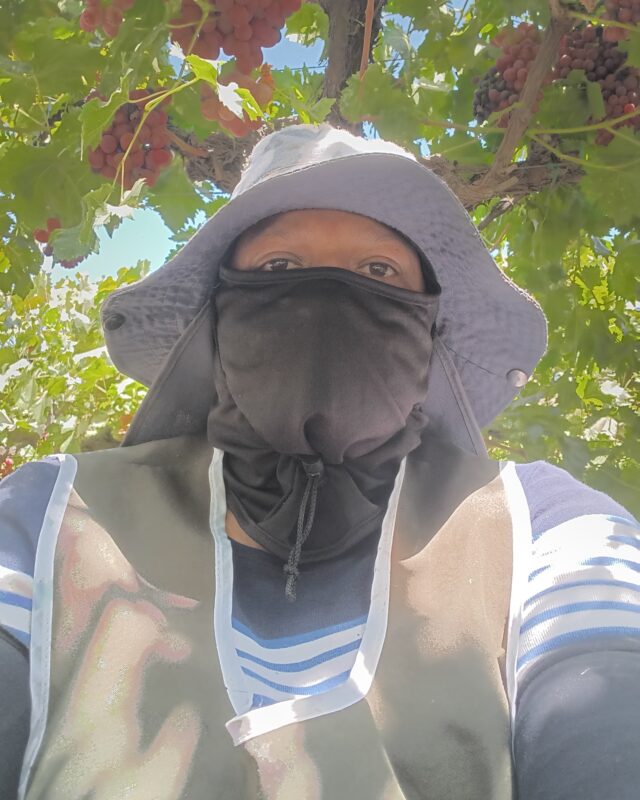
My name is Berta Arreola and I am a farm worker from Kern County.
Being a farm worker is hard work, but it allows me to make a living and take care of myself and my family.
As a farm worker, there are risks to not only our livelihood, but also to our lives. Sometimes, we face hazardous conditions while we work, such as pesticide exposure, floods, wildfires, and most importantly extreme heat.
The heat is a big factor on our work. Here in California, we have rights in the workplace to take breaks and have water while working, helping us on the fields when it gets too hot. I would like to share an experience I had at work where heat affected me real bad and I took my workplace rights seriously to prevent it from getting worse.
I was assigned to the shovel crew for a shift running from 6 a.m. to 1:30 p.m on a day that the weather forecast called for intense heat. Shortly after we started, the temperature was already at 87 degrees, and as the hours went by, it kept getting hotter.
The air felt stifling—there was no wind and no breeze whatsoever—and with every passing minute, the sun burned more intensely down on us.
As with typical hot days, I started drinking water constantly—every half hour, or even every two minutes—drinking so much that when we took our first break, I felt no hunger at all; I just wanted to keep drinking water. That is how I spent my shift.
Around noon, I began to feel like I was running out of oxygen; I couldn’t breathe properly and struggled to get air into my lungs. I started feeling dizzy, seeing stars, and my legs went weak; my body was trembling, my head felt heavy, and I felt nauseous. I tried to drink an electrolyte solution, but I couldn’t get anything down—I couldn’t swallow a thing, and I felt terribly stifled.
Everything I was experiencing at that moment felt awful. When I started noticing these changes in my body, I took off the hat and the headscarf I was wearing. I removed my arm sleeves, gloves, and apron—I took off everything I had on just to get a little air.
I slowly made my way to the shaded area provided by the foremen to try to regain my strength. Although I felt a bit better, I didn’t fully recover, so I decided to stop working for the day—that was it for me. I told myself it wasn’t worth risking my life for a single day of work; I would a thousand times rather lose a day than risk losing my life, especially since I have a beautiful life and a family waiting for me at home who I know still really need me.
This all happened to me on an ordinary day—one of the hottest days in July, when the temperature soared. It hit 106 degrees at noon to be exact.
I’ve suffered heatstroke three times so far while working in the fields—twice while picking crops and once while shoveling.
I know things would have been a lot worse if we didn’t have access to water or shade or the ability to stop working if we are suffering from heat stroke. These heat standards in California saved my life and its thanks to the advocacy and work from the UFW Foundation that we have them in the first place.
But not every state has these rights for workers. Every year workers suffer from heatstroke, heat illness and even death because they don’t have workplace protections from heat. The UFW Foundation has and continues to call for a nationwide heat standard for outside workers, standards that would save countless people from extreme heat.
I for one support the UFW Foundation’s efforts and I join them in calling for a national heat standard.
To help farm workers like me, please consider donating to the Foundation here.
Related Stories
Farm Worker Voices: At First Light
“I know what it feels like to have your back ache before noon, to have your hands cracked and dry, and to come home exhausted but still worry about whether there will be enough food for your children the next day. That life taught me something: if we don't look out for each other, no one else will."
“It’s an exhausting journey but don’t give up. Keep following your dreams."
Stay Informed
Keep up with our programs and stay informed about policy developments in immigration, workers’ rights and more with our weekly newsletter.